
6-7 October 2026, University of Stirling
Institute for Social Marketing and Health
New Directions in the Study of Alcohol Group
Scottish Alcohol Research Network
REGISTRATION IS NOW OPEN!Please register for the conference using the following link:
--
Researchers, policymakers, practitioners, and stakeholders are invited to join Alcohol Research 2026: New Thinking, New Directions, a new conference dedicated to advancing innovative, interdisciplinary perspectives on alcohol research, policy, and practice.Organised by the University of Stirling in collaboration with the New Directions in the Study of Alcohol Group, the conference aims to foster fresh ideas, highlight emerging evidence, and facilitate critical dialogue in addressing complex and evolving challenges in alcohol-related harm, prevention, treatment, and policy. The conference is also supported by the Scottish Alcohol Research Network.

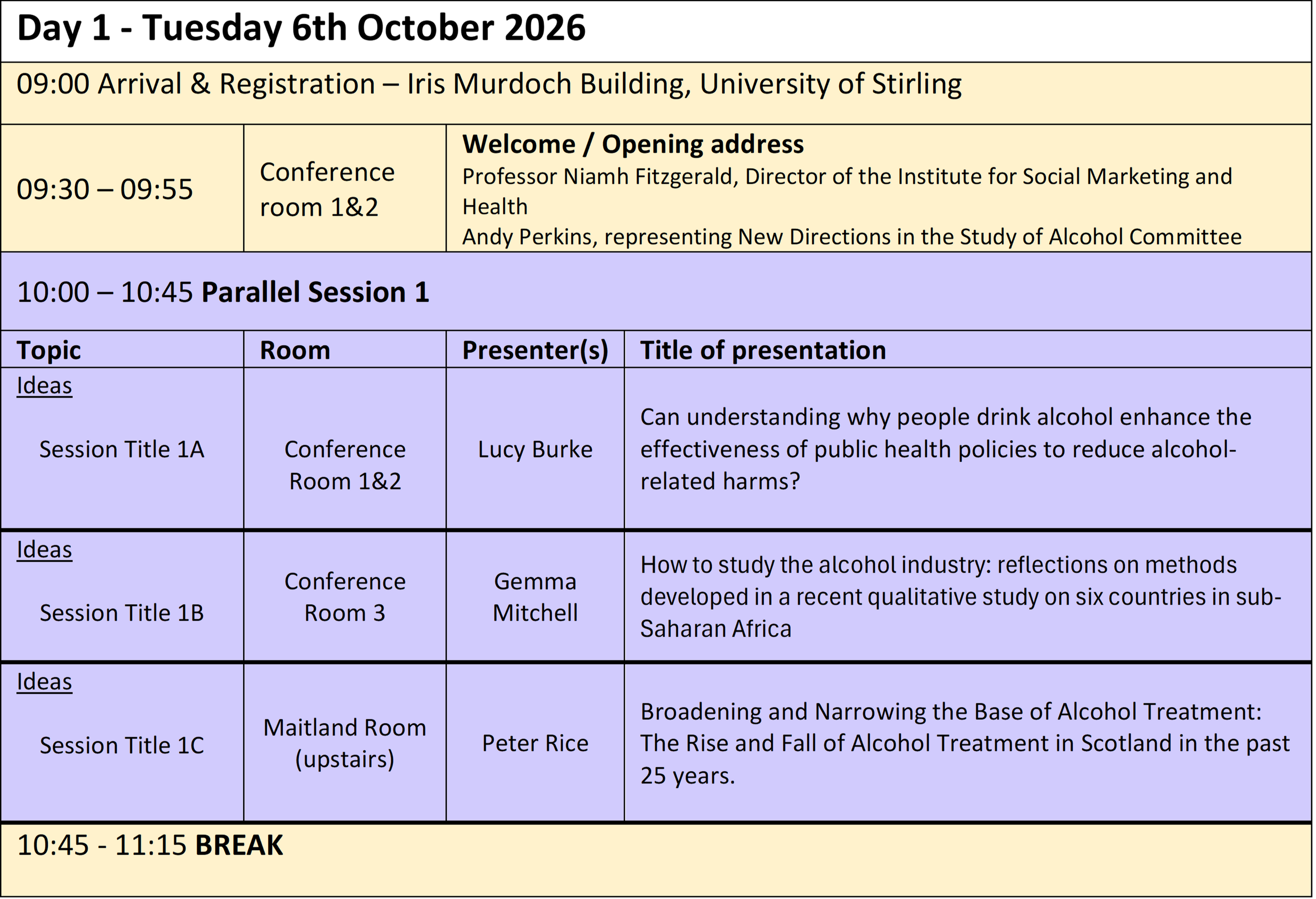
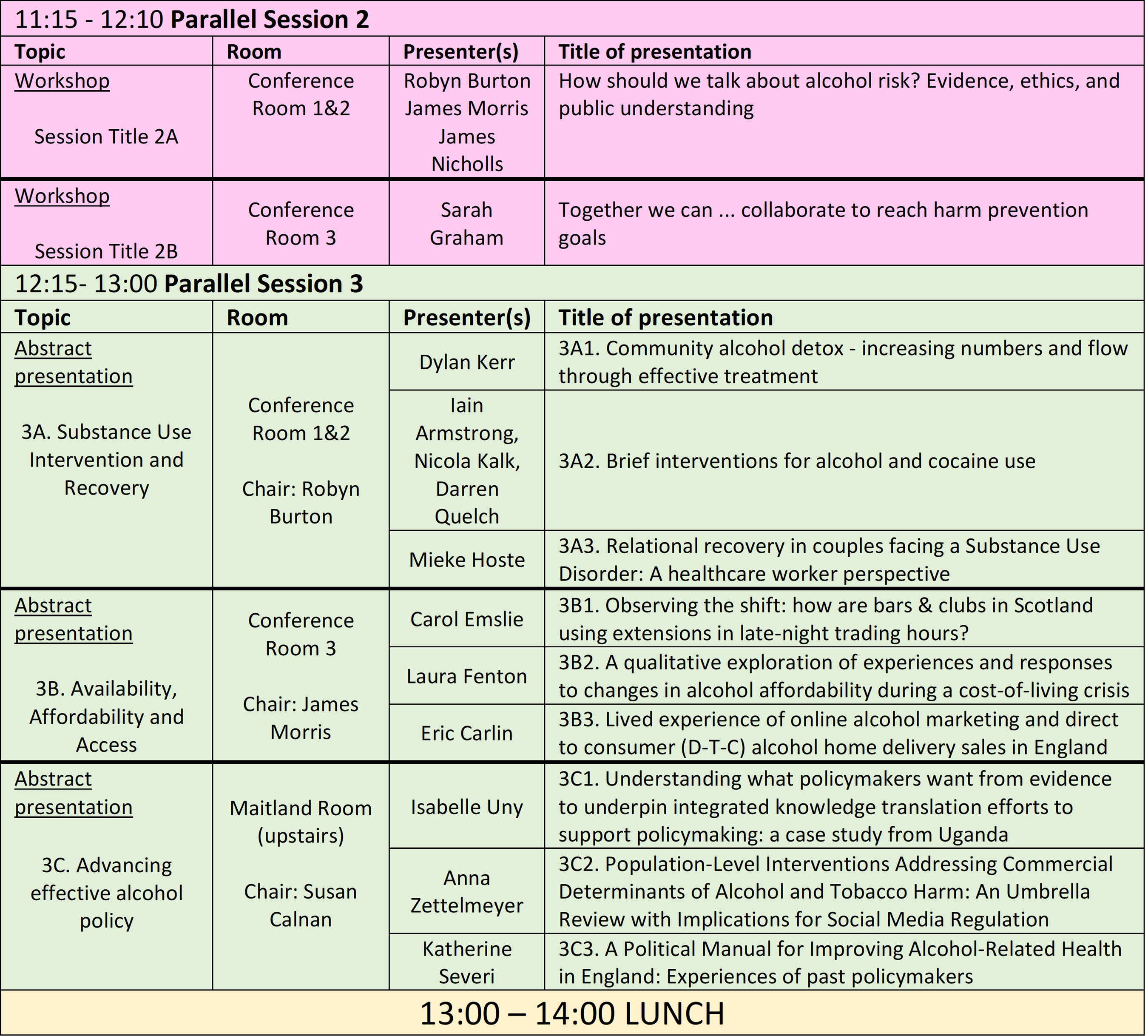
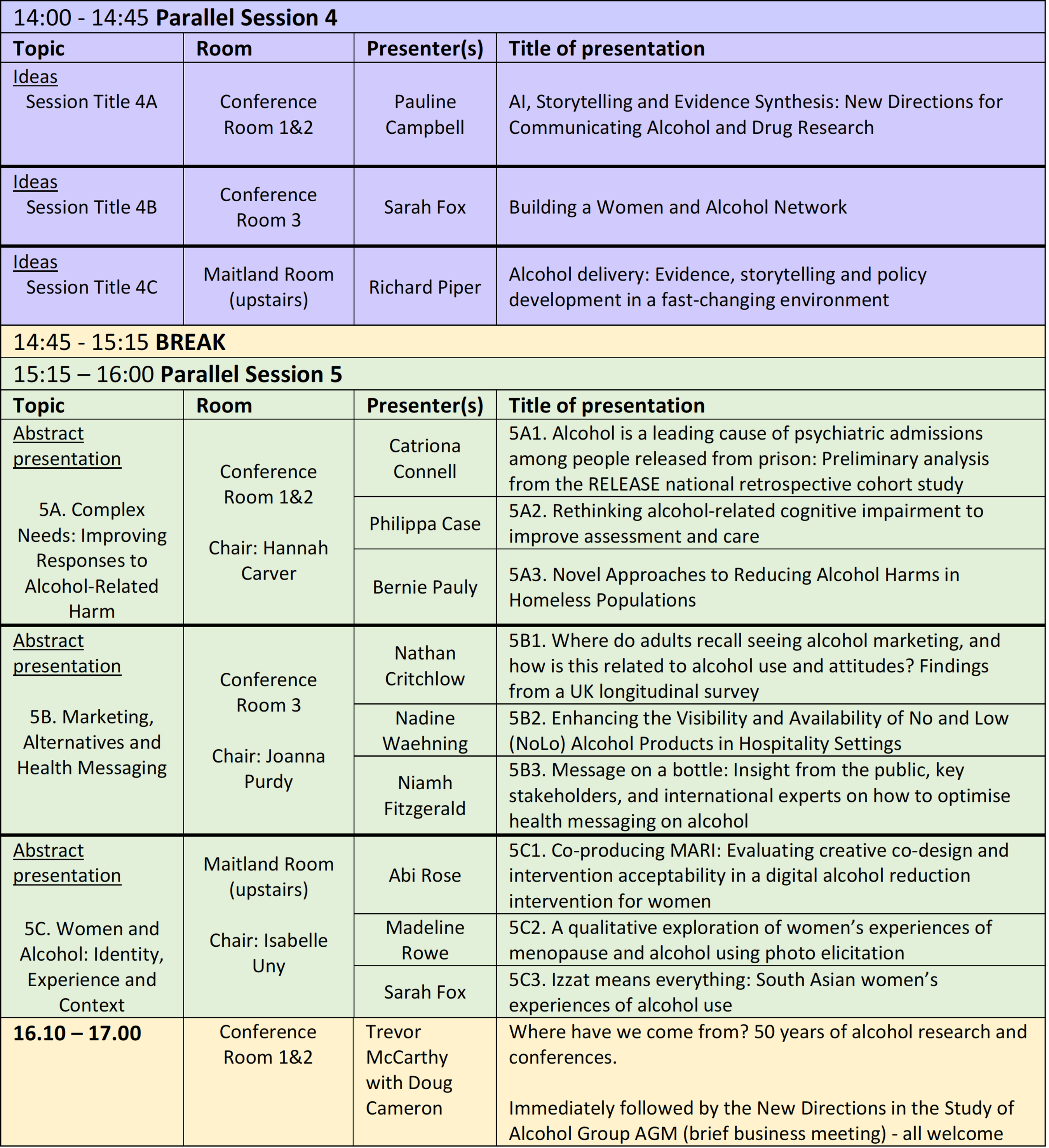
Conference programme
Alcohol Research 2026 is an exploration of new ideas, future challenges and innovative approaches in alcohol research and practice.It is an opportunity for researchers and practitioners to come together and share ideas, experiences and knowledge.The conference programme includes three types of sessions:
- new, ongoing, or emerging findings across the breadth of alcohol research, policy and practice
- proposals that focus on critical thinking and discussion.
- engaging participatory workshop sessions that actively involve attendees.The goal of the conference is to stimulate new thinking and create new collaborations.
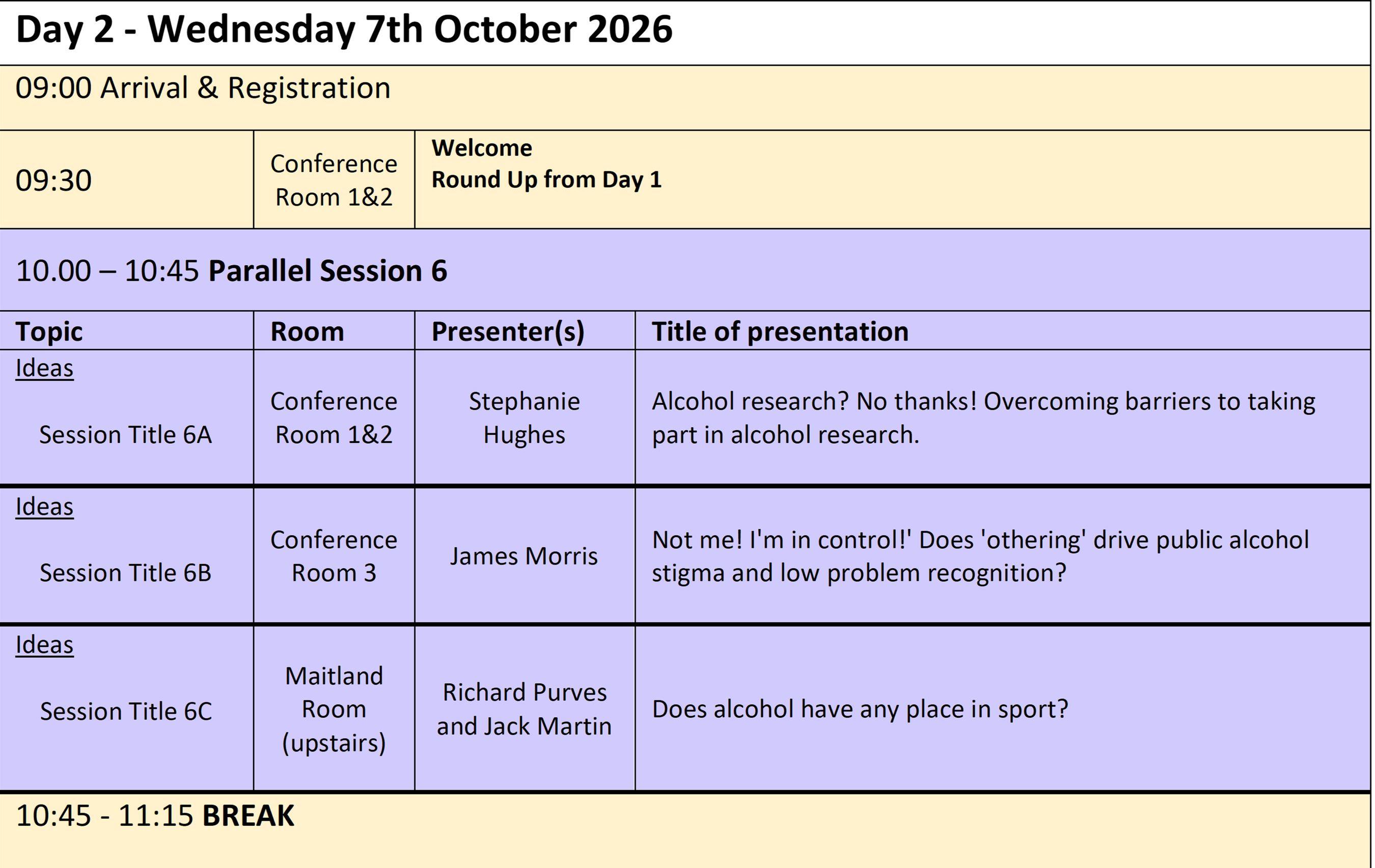
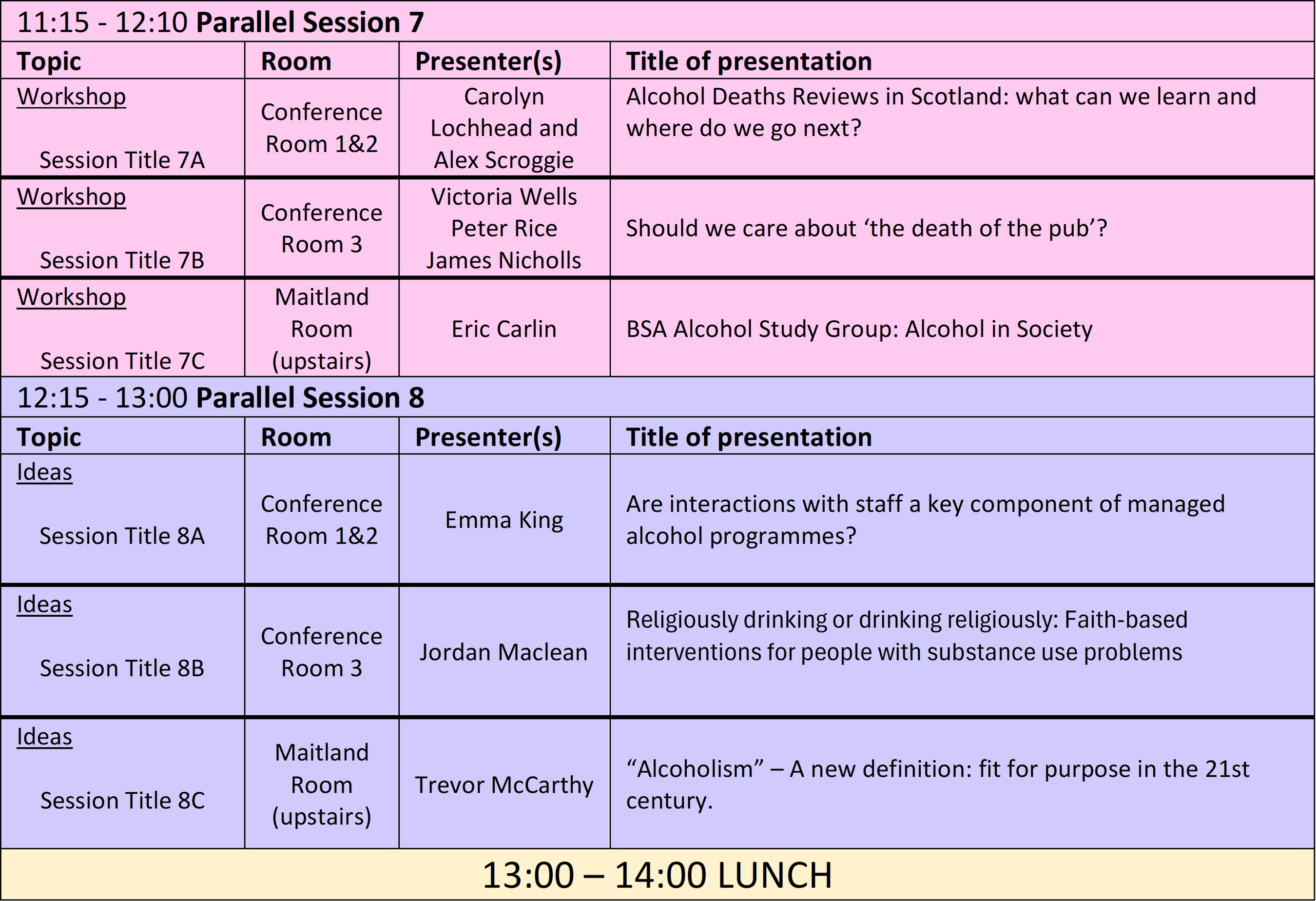
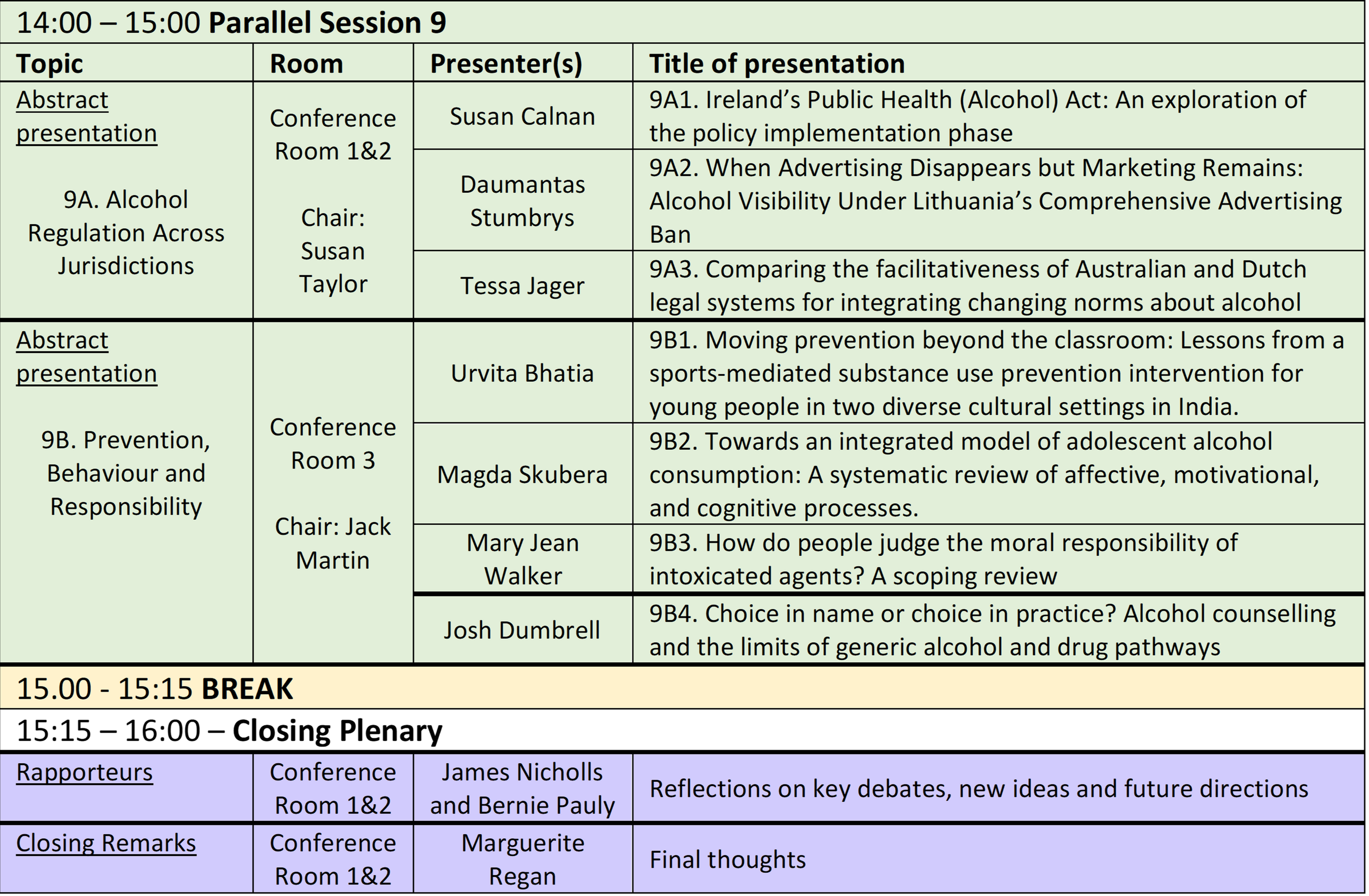
Celebrating 50 years of the New Directions in the Study of Alcohol Group
2026 marks 50 years since the New Directions in the Study of Alcohol Group was founded as a multidisciplinary forum to challenge established thinking in our understanding of alcohol problems and solutions, and the conference aims to provide a revitalised forum for a new generation to do the same.New Directions brings together leading researchers and emerging voices to reflect on the field’s development and explore new directions in alcohol research, policy and practice.

Submitting your proposal
We invite contributions that prioritise dialogue and exchange, welcoming projects, ideas, and contributors at any career stage and background. We encourage active participation from research, policy, practice, and lived experience communities.Submission Deadline extended
5th June May 2026Types of Submissions
We welcome proposals to contribute to the conference programme in three ways:1. Findings
We invite submissions presenting new, ongoing, or emerging findings across the breadth of alcohol research, policy and practice. This category includes:
• Research abstracts (e.g. empirical studies, systematic reviews, methodological innovations)
• New perspectives from policy and practice, including evaluations, service developments, and insights from implementation2. Ideas
We encourage proposals that focus on critical thinking and discussion. These sessions provide a platform to explore:
• Key dilemmas or controversies in the field
• Emerging challenges or unanswered questions
• Innovative or provocative perspectivesContributors will be given space to present and stimulate discussion around issues that may not yet have definitive answers but are important for shaping future directions.3. Interactive Workshops
We welcome proposals for engaging participatory sessions of 45 minutes duration that actively involve attendees. Workshops may include:
• Skill-building or training sessions
• Collaborative problem-solving or agenda setting
• Methods demonstrations or applied learning
Proposals should clearly describe the format, intended audience, and how interaction will be facilitated.The following format is compulsory for all proposed contributions:
A 250-word summary of what you are proposing using only the following headings:
• Background (can include either underpinning research, professional challenge, policy situation, origin of your idea)
• Why this matters.
• What this will add to participant thinking, knowledge, skills or future action.
You will also be required to make a separate declaration of interests.
Getting to the conference
Conference venue
The conference will be held in the Iris Murdoch Building on the University of Stirling campus.
University of Stirling
Stirling
FK9 4LA
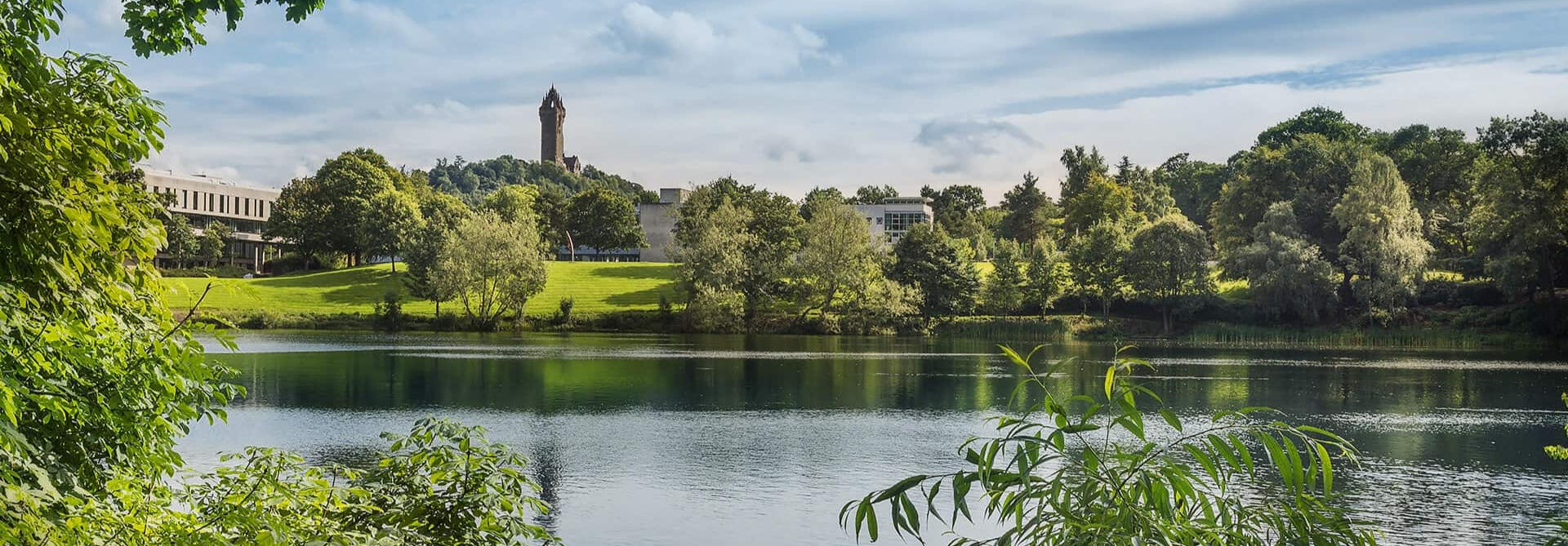
Scotland UKThe University of Stirling enjoys an impressive location in central Scotland. Set into 330 acres of stunning grounds, our accommodation and conference facilities boast the striking backdrop of the Ochil Hills and the majestic Wallace Monument.Closer still, at the heart of our idyllic campus sits Airthrey Loch, overlooked by its 18th century namesake, Airthrey Castle – two picture-perfect additions to the landscape. The loch and its banks are part of the original castle estate, and home to an abundance of wildlife. You’ll see swans and ducks enjoying a morning swim as you make your way to your meeting, and you won’t have to look too hard to spot a squirrel on campus either.The Iris Murdoch Building is a self-contained conference venue with gardens, gallery and lecture/reception room.This unique location is only two miles from the centre of Stirling, a city that has a reputation as one of the most attractive places to live in the UK and which offers an authentic glimpse into Scotland’s rich and bloodied history. It is beautifully positioned at the point where the Highlands meet the Lowlands, and is only 40 minutes from both Edinburgh and Glasgow, with direct connections via road and rail.CAR PARKING
Car parking is available on campus but spaces are limited, especially during term-time. Car parking charges will apply so please ensure that you pay these. The best way to pay is using the RingGo app or the pay-by-phone option on arrival. If you have questions about any aspect of car parking on campus, please refer to the University's Traffic and Parking Regulations, or contact the Car Parking Office, Cottrell Room 1A77 +44 (0) 1786 466065.If you are staying at the Stirling Court Hotel you are able to park your car there free of charge but please make sure you register your car with reception. Spaces are first come, first served but if the hotel car park is full you may park in another bay on campus but you MUST register at the hotel reception to avoid incurring a charge.
Accommodation
The conference fee for the two days will be £60pp, with discounts and fee waivers available to qualifying participants on application. This does not include accommodation.Accommodation at Stirling Court Hotel is now fully booked. Other options in Stirling city centre are available including:The Meadowpark (located at the entrance to the University campus).Travelodge Stirling City Centre (near train station/bus station and near bus stop for UniLink buses).Premier Inn Stirling City Centre (near train station/bus station and near bus stop for UniLink buses).Stirling Highland Hotel (city centre, short walk to train/bus stations and Unilink buses).Golden Lion Hotel (city centre, short walk to train/bus stations and Unilink buses).
Text
Text
Text